![FFD+Logo_cmyk[1]+(2)_edited.png](https://static.wixstatic.com/media/6454fa_d0e95201e13a4f73ab839cd5a9bbb22b~mv2.png/v1/fill/w_320,h_42,al_c,q_85,usm_0.66_1.00_0.01,enc_avif,quality_auto/FFD%2BLogo_cmyk%5B1%5D%2B(2)_edited.png)

Roofline Project Planning for Lasting Results

A roofline replacement can transform a tired property quickly, but the tidy new fascia boards are only the visible part of the job. Proper roofline project planning is what prevents a smart-looking installation from concealing poor drainage, unaddressed timber decay or awkward joins that spoil the finish within a few years.
For homeowners across Essex and Suffolk, the aim is straightforward: protect the eaves, move rainwater away from the building and leave the home looking properly finished. Getting there calls for more than choosing a colour and accepting the cheapest figure.
Start Roofline Project Planning at the Eaves
The roofline is the group of components at the lower edge of the roof: fascias, soffits, guttering, downpipes and associated trims. They work together. If one part is failing, it can affect the others. A blocked or badly aligned gutter, for example, can repeatedly soak the fascia behind it. A soffit with poor ventilation can contribute to damp conditions in the roof space.
Begin by looking for the signs that warrant a closer inspection. Peeling paint, soft timber, staining below gutters, overflowing rainwater and loose joints all deserve attention. From ground level, you may also notice sagging gutter runs, uneven lines along the eaves or gaps where birds can enter. Do not assume these are purely cosmetic faults. Water finds its way into the smallest weak point.
The key point is that the condition behind the existing boards is not always visible before removal. Older timber fascias can hide rotten rafter feet, damaged eaves or failed felt support. This does not mean every replacement project becomes a major repair, but it does mean the quotation and plan should explain how such findings will be handled.
A contractor who simply covers old timber with plastic may make the problem less visible without making it better. Where timber is unsound, it should be dealt with properly before new roofline materials are fitted.
Decide Whether Repair or Full Replacement Is Right
Not every property needs a complete renewal. A localised gutter leak, a slipped bracket or a damaged downpipe may be repairable if the rest of the system is sound. Targeted remedial timber work can also make sense where deterioration is limited and the surrounding roofline remains in good condition.
Full replacement is often the better value where original timber fascias need regular painting, several gutter sections leak, soffits are deteriorating or there is widespread rot at the eaves. Replacing the system as one considered project avoids fitting new gutters to weak fascia boards, or renewing fascias while leaving inadequate rainwater capacity in place.
There is a trade-off. A repair costs less initially and may be the sensible answer for a relatively new installation. A piecemeal approach to an ageing roofline, however, can mean repeated call-outs and mismatched finishes. A site visit should establish which route is honest for the condition of the property, rather than treating replacement as the answer to every problem.
What a Clear Quotation Should Cover
A useful quotation is not just a total at the bottom of a page. It should make clear what will be removed, supplied, fitted and repaired. That is how homeowners can compare like with like.
Ask whether the price includes removal and disposal of the existing roofline, new fascias and soffits, guttering, downpipes, brackets, corners and end caps. It should also confirm the proposed material and colour, along with any eaves protection, ventilation or bird guard requirements. For a bungalow, extension, bay window or garage, check that every elevation has been accounted for.
Most importantly, ask what happens if rotten rafter ends or damaged eaves are found once the old boards come off. This is where some low initial prices become expensive. The work was always a possibility, but it was left outside the price so it could be presented later as an unavoidable extra.
At Fascia Fit Direct, remedial repairs to rotten rafter feet and eaves are included in the original quotation where identified, rather than being used as a surprise charge once work is under way. That gives the customer a far clearer picture of the likely cost and the standard being allowed for.
Plan the Details That Make the Finish
A roofline should look straight, balanced and purposeful from the pavement as well as from close up. The quality is usually found in the details that rushed installers treat as an inconvenience.
Box ends and corners
Box ends, the formed sections at a roof edge or gable, deserve careful attention. A well-made box end has crisp lines, neatly formed returns and a finish that looks built for the property. A rushed version may rely on obvious joins, excessive sealant or poorly matched trims.
Corners should be precise too. They need to sit cleanly without gaps or bulky overlapping sections. Single-piece cuts where appropriate create a neater, stronger-looking result than assembling several short offcuts simply because it is quicker.
Fixings and straight lines
Concealed fixings give fascia boards a cleaner appearance and avoid the peppered look of visible screw heads. They are not a substitute for sound preparation, though. The boards still need secure fixing into suitable structure, with proper alignment along the run.
Gutters should follow a controlled fall towards outlets, not droop between brackets or sit level because it was easier to install. Too little fall leaves standing water and debris. Too much can make the line look wrong and may cause water to overshoot in heavy rain. The right detail depends on the run length, roof area and number of outlets.
Ventilation and protection
Soffit ventilation is sometimes needed to help maintain airflow in the roof space. The exact requirement depends on the roof construction and existing ventilation arrangements, so it should be assessed rather than added as a meaningless extra.
Eaves protection can support the lower edge of the roof covering and guide water into the gutter. Bird guards may also be worthwhile where gaps beneath tiles provide access for nesting birds. These are small components, but they can save trouble if fitted at the right time.
Choose Materials for the Property, Not Just the Photograph
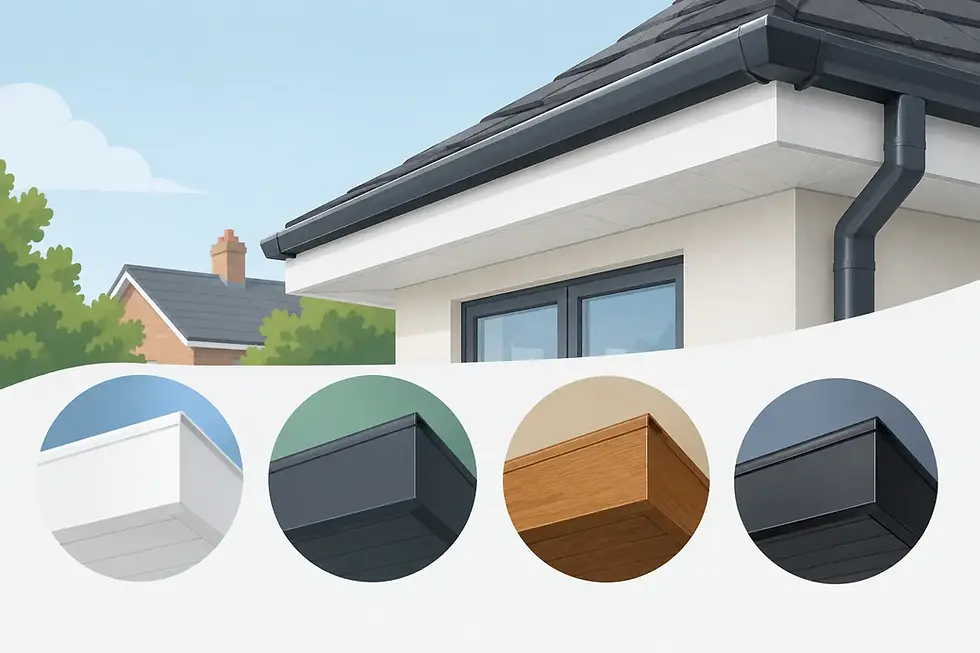
Modern uPVC fascia, soffit and guttering systems are popular because they do not need the continual painting associated with timber. They are available in white, black, anthracite grey and wood-effect finishes, allowing the roofline to suit the windows, cladding and character of the home.
Colour choice should be made with the whole exterior in view. White is bright and traditional, while darker colours can give a sharper contrast against pale render or brickwork. Wood-effect options may suit houses where a timber appearance matters, but they still need careful fitting. A premium board fitted with untidy joints is not a premium result.
It is also worth considering gutter capacity. A modest porch roof has very different drainage needs from a large tiled roof with broad valleys. Heavy downpours are not unusual in this part of the country, and undersized or poorly planned guttering can overflow even when it is new.
Prepare the Property and the Working Day
Good planning makes installation less disruptive. Before work begins, move vehicles away from the immediate work area and clear fragile pots, garden furniture and ornaments from beneath the eaves. Let the contractor know about conservatories, extensions, shared access, power cables, satellite dishes or anything else that may affect safe access.
Scaffolding may be needed, especially on higher properties or where access is restricted. This is not a sign that a job is being made complicated. Safe access allows old materials to be removed carefully and new work to be fitted accurately. Trying to cut corners on access often leads to cut corners in the finish.
If you share a drive or live close to neighbours, a brief word beforehand is courteous and practical. There may be delivery vehicles, scaffold installation and daytime working noise. A professional team should keep the site orderly, protect the area below the work and remove waste rather than leaving the clean-up to the homeowner.
Use Evidence When Choosing an Installer
Roofline work is easy to judge once you know where to look. Ask to see completed jobs, preferably on properties similar to yours. Look at the box ends, corners, straightness of fascia lines and gutter alignment. Check whether downpipes are positioned sensibly and whether the finish still looks clean from a few metres away.
Local references matter because they show how a firm works after the quotation has been accepted, not merely how well it advertises. A family-run specialist should be happy to explain the proposed work plainly, answer questions without jargon and stand behind the details that will remain visible on your home for years.
The best time to raise concerns is before installation starts. A careful conversation about hidden timber, drainage, colour, ventilation and finishing standards protects both the homeowner and the contractor. Pay for workmanship that treats your home as its best advert, and the roofline should quietly do its job through every spell of bad weather.


Comments